
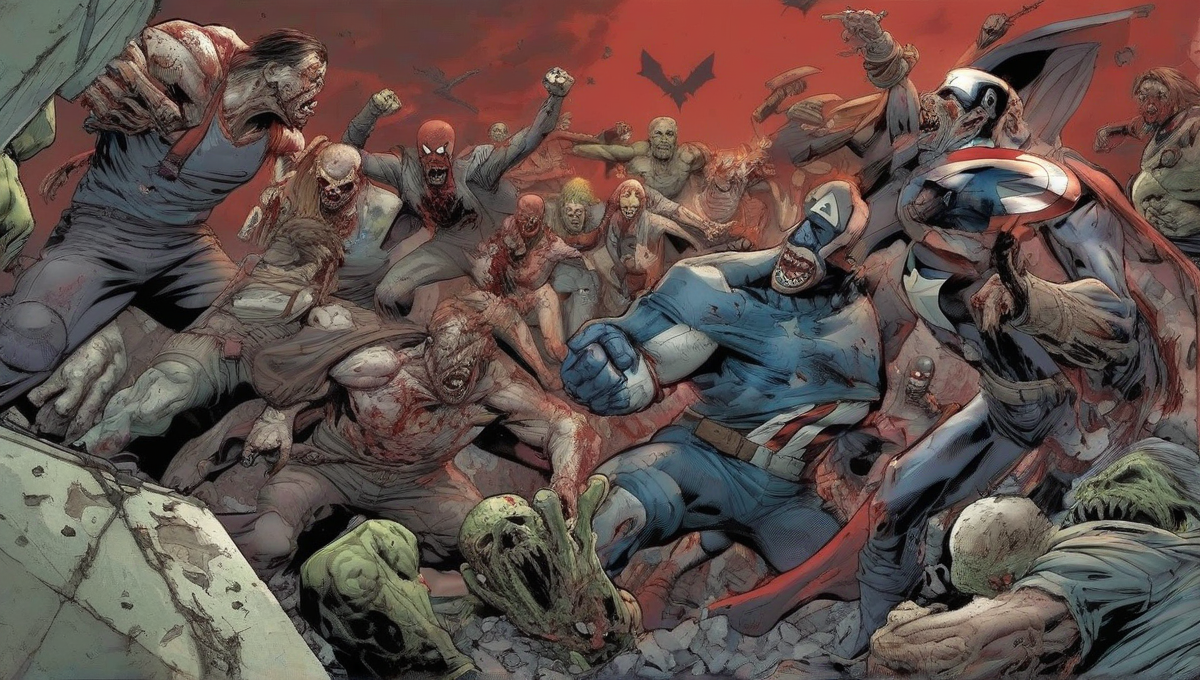
The Rise of the Undead Avengers: Marvel’s Zombie Infestation
The Marvel Universe is no stranger to apocalyptic threats—Thanos’ snap, Galactus’ hunger, and the Infinity Gauntlet’s power have all pushed heroes to their limits. But few catastrophes are as grotesque, terrifying, and strangely compelling as the Marvel Zombies saga. What began as a bizarre What If…? one-shot in 2005 spiraled into a full-blown horror phenomenon, infecting some of Marvel’s most iconic heroes and reshaping the multiverse in the process.
This blog post explores the rise of the undead Avengers, dissecting the origins, evolution, and cultural impact of Marvel’s zombie plague. Whether you’re a longtime fan or a newcomer to the undead side of Marvel, this guide will break down the key storylines, analyze the horror elements, and offer actionable insights for readers and creators alike.
The Origins: How a What If…? Issue Became a Horror Phenomenon
The Marvel Zombies saga didn’t start as a grand, universe-shaking event—it began as a darkly comedic “what-if” scenario in Marvel Zombies (2005), a five-issue miniseries by Robert Kirkman and Sean Phillips. But what made this story stand out was its unflinching horror and satirical take on superhero tropes. Here’s how it all began.
The What If…? Spark: A Multiversal Infection
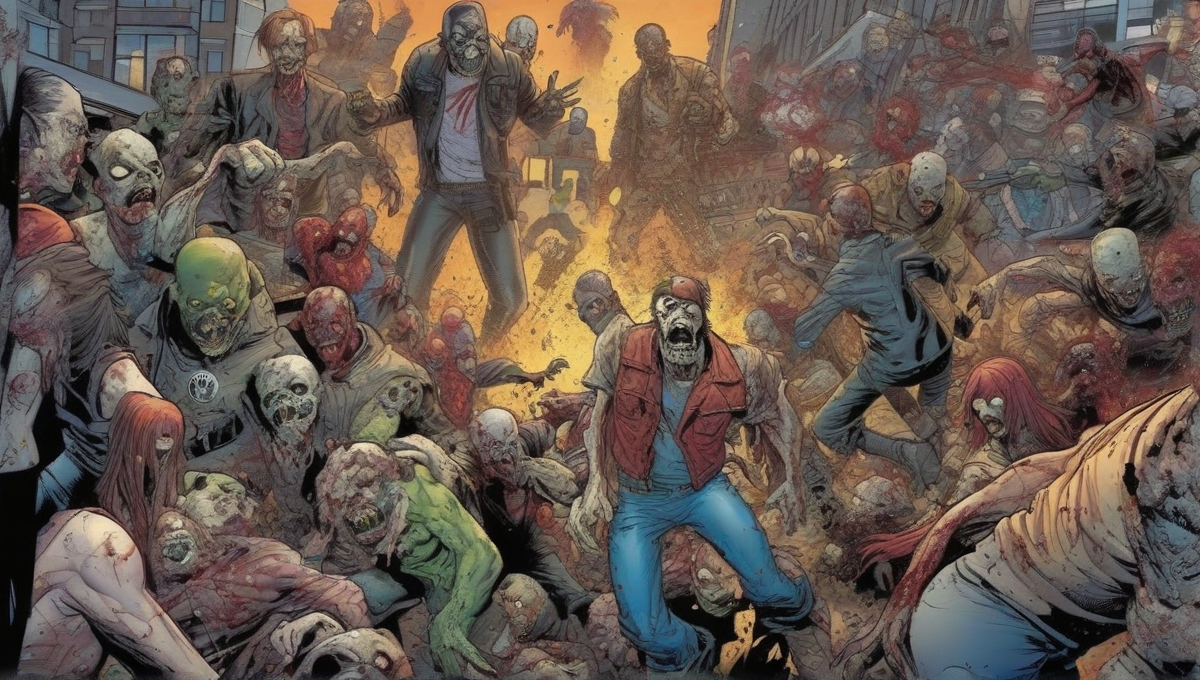
The original Marvel Zombies (2005) takes place in Earth-2149, an alternate universe where a mysterious virus turns superhumans into flesh-hungry zombies. The infection spreads rapidly, starting with Sentry, who unwittingly carries the plague from another dimension. Within hours, the Avengers, X-Men, and Fantastic Four are all infected, turning on each other in a blood-soaked feeding frenzy.
Key Takeaway:
- The story subverts superhero optimism—instead of saving the world, the heroes consume it.
- The virus’s origin is deliberately vague, adding to the horror (a common trope in zombie fiction).
- The first issue ends with Spider-Man biting Mary Jane, a shocking moment that cements the story’s brutality.
Actionable Insight:
If you’re writing a horror story, start with a familiar setting (like the Avengers) and twist expectations—readers expect heroes to win, so making them the villains creates instant tension.
The Art of Horror: Sean Phillips’ Gruesome Aesthetic
Sean Phillips’ gritty, detailed artwork is a major reason Marvel Zombies works so well. Unlike traditional superhero comics, his exaggerated gore and body horror make the undead Avengers feel visceral and disturbing.
Examples of Effective Horror Techniques:
- Close-ups of rotting flesh (e.g., Captain America’s exposed jawbone).
- Blood splatter as a visual motif (panels are often drenched in red).
- Distorted facial expressions (heroes’ faces contort in hunger, not heroism).
Actionable Insight:
For comic artists and writers:
- Use lighting to enhance horror (dark, shadowy panels vs. sudden, bright gore).
- Focus on small details (e.g., a zombie’s fingers digging into flesh) to make violence feel real and unsettling.
The Satire: Superheroes as Monsters
Kirkman didn’t just want to gross readers out—he wanted to critique superhero tropes. The zombified Avengers retain their intelligence and personalities, making their descent into cannibalism even more tragic.
Examples of Satirical Storytelling:
- Iron Man’s tech fails him—his armor can’t stop the hunger, symbolizing how even the smartest heroes are powerless against primal urges.
- Wolverine’s healing factor makes him more dangerous—he can’t die, so he keeps eating.
- Doctor Doom’s arrogance leads to his downfall—he thinks he can control the virus, but it consumes him too.
Actionable Insight:
If you’re writing a deconstruction of a genre, keep the core elements intact (e.g., hero personalities) but flip the script on their usual roles. This makes the horror more personal for fans.
The Infection Spreads: Key Storylines in the Marvel Zombies Saga
After the success of Marvel Zombies (2005), the undead plague spilled into other dimensions, infecting new heroes and expanding the lore. Here are the most important follow-up stories and how they evolved the mythos.
Marvel Zombies 2 (2007): The Zombies Go Cosmic
The original miniseries ended with the zombies consuming everything on Earth, leaving them starving. Marvel Zombies 2 explores what happens when hungry super-zombies turn their attention to the cosmos.
Key Developments:
- The zombies build a spaceship and travel to other planets, spreading the infection.
- Galactus arrives—but instead of being a world-eater, he’s eaten by the zombies, who gain his Power Cosmic.
- A new threat emerges: The Zombie King (Wanda Maximoff), who uses her reality-warping powers to create a zombie utopia.
Why It Matters:
- Expands the scope—the zombies are no longer a local threat but a multiversal one.
- Introduces cosmic-level stakes—if the zombies can eat Galactus, no one is safe.
- Deepens the tragedy—the zombies are aware of their monstrosity but can’t stop themselves.
Actionable Insight:
If you’re writing a sequel to a horror story, escalate the stakes—don’t just repeat the same threat. Make the zombies smarter, stronger, and more desperate.
Marvel Zombies 3 & 4 (2008-2009): The Human Resistance
After the zombies devour the universe, Marvel Zombies 3 shifts focus to Machine Man (Aaron Stack), a sentient robot immune to the virus, who leads a human resistance against the undead.
Key Story Beats:
- Machine Man teams up with Jocasta (another AI) to find a cure.
- The zombies evolve—some develop new abilities (e.g., Zombie Hulk’s gamma-powered hunger).
- A glimmer of hope: A human child is found who might be immune to the virus.
Why It Matters:
- Introduces a new protagonist—Machine Man’s cold logic contrasts with the zombies’ mindless hunger.
- Explores the ethics of survival—should the last humans risk everything for a cure?
- Sets up Marvel Zombies 4, where Morbi (a zombie hunter) and Daimon Hellstrom battle the undead.
Actionable Insight:
When writing a post-apocalyptic story, focus on the survivors’ psychology—their hope, despair, and moral dilemmas make the horror more relatable.
Marvel Zombies: Dead Days (2007): The First Bite
Dead Days is a prequel that shows how the infection spread in the first 24 hours. It’s a masterclass in zombie horror, with key moments that define the outbreak.
Critical Scenes:
- Sentry’s arrival—he’s patient zero, bringing the virus from another dimension.
- The Avengers’ first meeting—they realize something is wrong but can’t stop the spread.
- The Fantastic Four’s last stand—Reed Richards tries to find a cure but is bitten by Sue Storm.
Why It Matters:
- Builds tension—readers know the heroes will fall, but watching them struggle is heartbreaking.
- Shows the virus’s speed—within one day, the entire superhero community is infected.
- Humanizes the heroes—even in their last moments, they try to save others.
Actionable Insight:
For zombie outbreak stories, focus on the early stages—the confusion, denial, and desperate attempts to stop the spread make the horror more immediate.
The Multiversal Plague: How Zombies Infected the Marvel Universe
The Marvel Zombies saga didn’t stay confined to Earth-2149—it leaked into the main Marvel Universe (Earth-616) and other dimensions, creating crossovers, cameos, and even alternate realities. Here’s how the zombie virus spread beyond its original story.
Marvel Zombies vs. The Army of Darkness (2007): A Crossover with Classic Horror
In a bizarre but brilliant crossover, Marvel teamed up with Dynamite Entertainment to pit the undead Avengers against Ash Williams from Evil Dead.
Key Moments:
- Ash is pulled into Earth-2149 and teams up with Dazzler to survive.
- The zombies are smarter—they set traps and use weapons, making them more dangerous.
- A darkly funny ending—Ash escapes, but the zombies follow him back to his dimension.
Why It Matters:
- Proves the zombies can work in different genres—this is horror-comedy at its best.
- Introduces the idea of the virus spreading to other universes.
- Shows that even a B-movie hero like Ash can’t stop the zombies.
Actionable Insight:
If you’re writing a crossover, play to each property’s strengths—Ash’s sarcasm and resourcefulness contrast with the zombies’ relentless horror.
Secret Wars (2015): The Zombies Invade the Main Marvel Universe
During Secret Wars, Doctor Doom created Battleworld, a patchwork of different realities—including the Marvel Zombies’ domain. This led to Earth-616 heroes encountering their undead counterparts.
Key Events:
- The zombies escape Battleworld and infect the main Marvel Universe.
- Deadpool is immune (thanks to his healing factor) and fights the undead.
- The infection is contained, but not before killing key heroes (e.g., Black Panther).
Why It Matters:
- Proves the zombies are a legitimate threat—even Doom’s multiverse can’t contain them.
- Shows the zombies’ potential as a recurring menace.
- Sets up future stories (e.g., Marvel Zombies: Resurrection).
Actionable Insight:
When introducing a horror element into a superhero story, make it feel like a real threat—don’t just use it for shock value. Kill major characters to show the stakes.
Marvel Zombies: Resurrection (2020): The Return of the Undead
After years of absence, the zombies returned in Marvel Zombies: Resurrection, a five-issue miniseries that revived the franchise for modern readers.
Key Developments:
- The zombies have evolved—some retain their minds, while others are mindless husks.
- A new generation of heroes (e.g., Ms. Marvel, Miles Morales) fight the undead.
- The virus mutates, creating new zombie variants (e.g., fast zombies, smart zombies).
Why It Matters:
- Updates the concept for new readers—the zombies are more diverse and dangerous.
- Shows the franchise isn’t just nostalgia—it can evolve with modern storytelling.
- Leaves the door open for future stories.
Actionable Insight:
If you’re reviving an old horror concept, modernize it—add new twists (e.g., zombie variants) to keep it fresh.
The Horror of Marvel Zombies: Why This Story Resonates
The Marvel Zombies saga isn’t just gory fan service—it’s a well-crafted horror story that subverts expectations and explores dark themes. Here’s why it works so well and what creators can learn from it.
The Tragedy of the Zombie Hero
One of the most haunting aspects of Marvel Zombies is that the heroes remember who they were. They know they’re monsters, but they can’t stop themselves.
Examples of Tragic Heroism:
- Spider-Man refuses to eat humans for as long as possible, starving himself until he finally gives in.
- Colossus begs to be killed before he hurts anyone else.
- Wolverine tries to resist, but his healing factor makes him unstoppable.
Why It Works:
- Makes the horror personal—readers sympathize with the zombies even as they’re horrified by them.
- Adds depth to the story—it’s not just about survival, but about moral decay.
- Creates internal conflict—the zombies hate what they’ve become, making them more complex.
Actionable Insight:
For horror writers, humanize the monsters—give them regrets, fears, and moments of clarity to make them more terrifying.
The Satire of Superhero Culture
Marvel Zombies isn’t just a zombie story—it’s a satire of superhero tropes. Kirkman and Phillips mock the idea of invincible heroes by showing how easily they can fall.
Examples of Satire:
- The Avengers’ teamwork fails—they turn on each other instead of working together.
- Iron Man’s tech is useless—his armor can’t stop hunger.
- Doctor Doom’s ego dooms him—he thinks he can control the virus, but it consumes him.
Why It Works:
- Makes the story feel fresh—even if you know the heroes, their downfall is unexpected.
- Adds layers to the horror—it’s not just physical decay, but moral and intellectual failure.
- Makes the story more relatable—readers laugh at the absurdity before being horrified by the consequences.
Actionable Insight:
If you’re deconstructing a genre, exaggerate its flaws—show how superhero logic fails in extreme situations.
The Evolution of Zombie Horror
Marvel Zombies didn’t just copy The Walking Dead—it adapted zombie tropes to fit the superhero genre, creating something unique.
How It Differs from Traditional Zombies:
| Traditional Zombies | Marvel Zombies |
|||
| Slow, mindless | Fast, intelligent (some retain their minds) |
| Weak, easy to kill | Nearly indestructible (healing factors, super strength) |
| Spread by bites | Spread by any contact (even a scratch infects) |
| Survival is the goal | Consumption is the goal (they want to eat) |
Why It Works:
- Makes the zombies more dangerous—they’re not just mindless monsters, but strategic killers.
- Fits the superhero genre—if regular zombies are scary, superpowered zombies are apocalyptic.
- Keeps the horror fresh—readers can’t predict how the zombies will behave.
Actionable Insight:
When adapting a horror trope to a new genre, modify the rules to fit the setting—superheroes need super-zombies.
The Legacy of Marvel Zombies: What’s Next for the Undead Avengers?
The Marvel Zombies saga has left a lasting impact on Marvel’s multiverse, inspiring new stories, adaptations, and even video games. Here’s what the future might hold for the undead Avengers.
Marvel Zombies in the MCU: Will We See Them on Screen?
With Disney+’s What If…? season 2 featuring zombie variants (e.g., Zombie Wanda), the door is open for a full Marvel Zombies adaptation.
Possible MCU Adaptations:
- A Marvel Zombies animated series (similar to What If…? but darker).
- A live-action Marvel Zombies movie (R-rated, like Logan).
- Cameos in other MCU projects (e.g., zombie variants in Deadpool 3).
Why It Could Work:
- The MCU loves multiversal stories—zombies fit right in.
- Horror is gaining traction (WandaVision, Moon Knight).
- Fans want more mature content—a Marvel Zombies project could be Marvel’s answer to The Boys.
Actionable Insight:
If you’re pitching a horror adaptation, highlight the multiversal potential—show how it can tie into existing stories.
Video Games & Merchandise: The Zombies’ Pop Culture Invasion
The Marvel Zombies brand has expanded beyond comics, appearing in video games, toys, and collectibles.
Notable Appearances:
- Fortnite (Marvel Zombies crossover event).
- Marvel Future Fight (playable zombie characters).
- Marvel Contest of Champions (zombie variants as bosses).
Why It Matters:
- Proves the concept has mainstream appeal.
- Introduces the zombies to new audiences.
- Keeps the franchise relevant between comic runs.
Actionable Insight:
For creators looking to expand a horror IP, explore multimedia opportunities—games, merch, and cameos can keep the property alive.
The Future of Marvel Zombies in Comics
After Resurrection, the zombie plague isn’t over. Here’s what could come next:
Possible Story Directions:
- A zombie Galactus (after consuming the Power Cosmic).
- A cure that backfires (creating a new, worse infection).
- A team-up with other horror Marvel characters (e.g., Ghost Rider, Blade).
Why It Matters:
- Keeps the story fresh—there are still new directions to explore.
- Allows for crossovers with other Marvel horror properties.
- Gives fans something to anticipate.
Actionable Insight:
If you’re planning a long-running horror series, leave room for evolution—don’t resolve everything in one story.




Leave a Comment